
 Dharohar Weaves
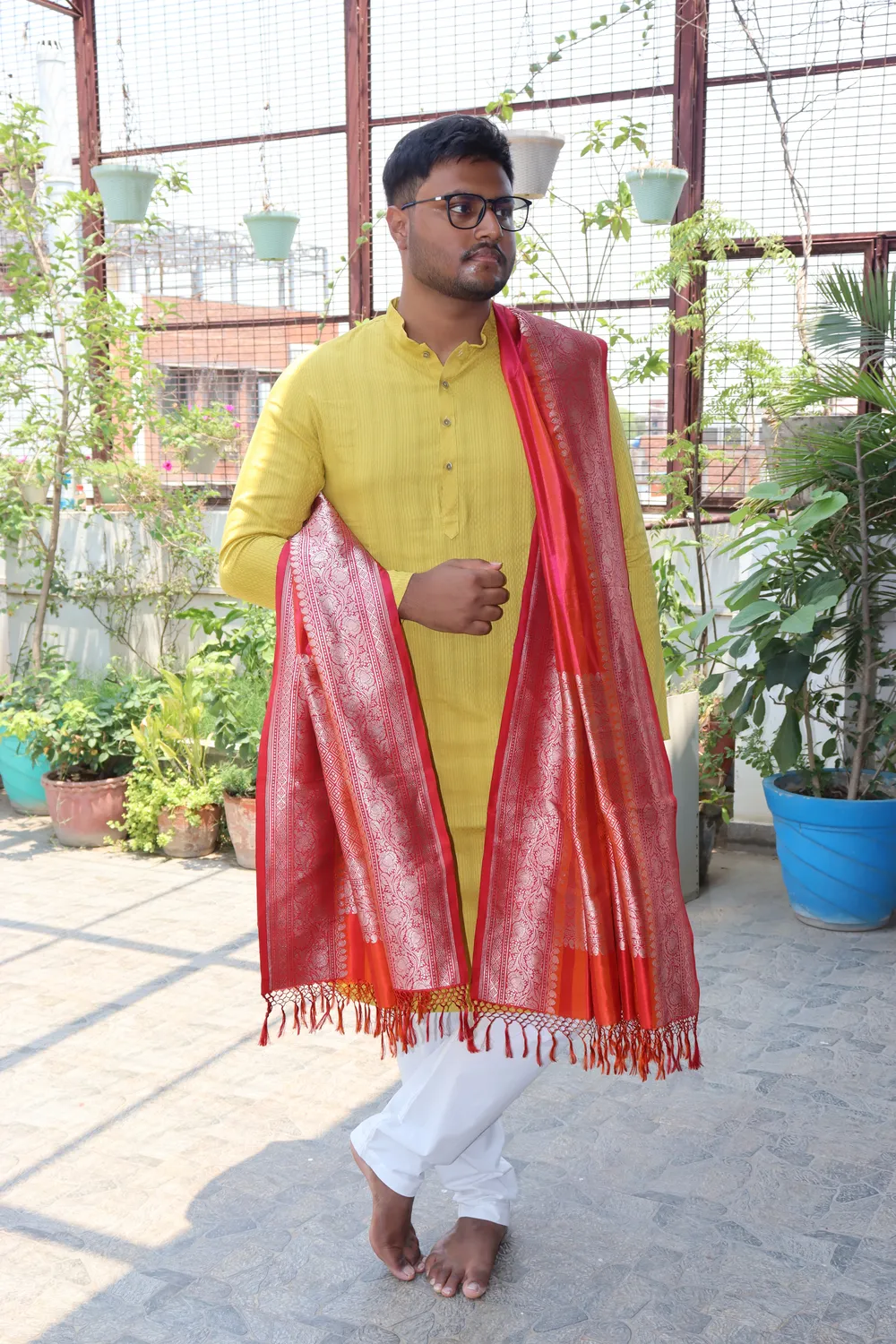
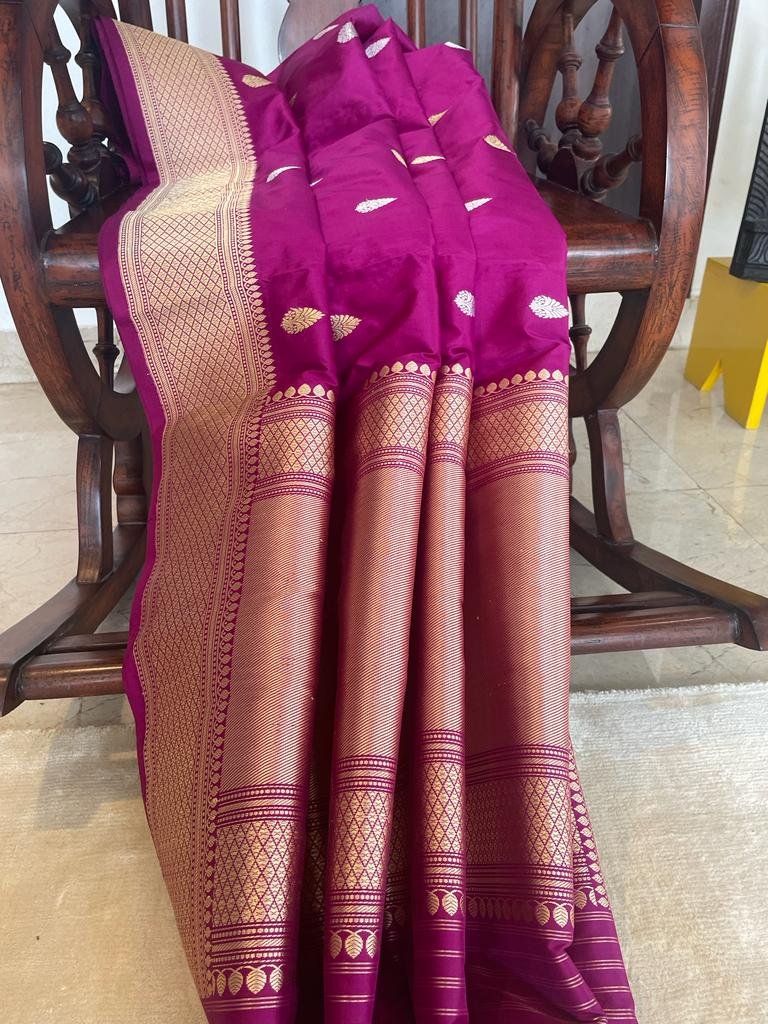
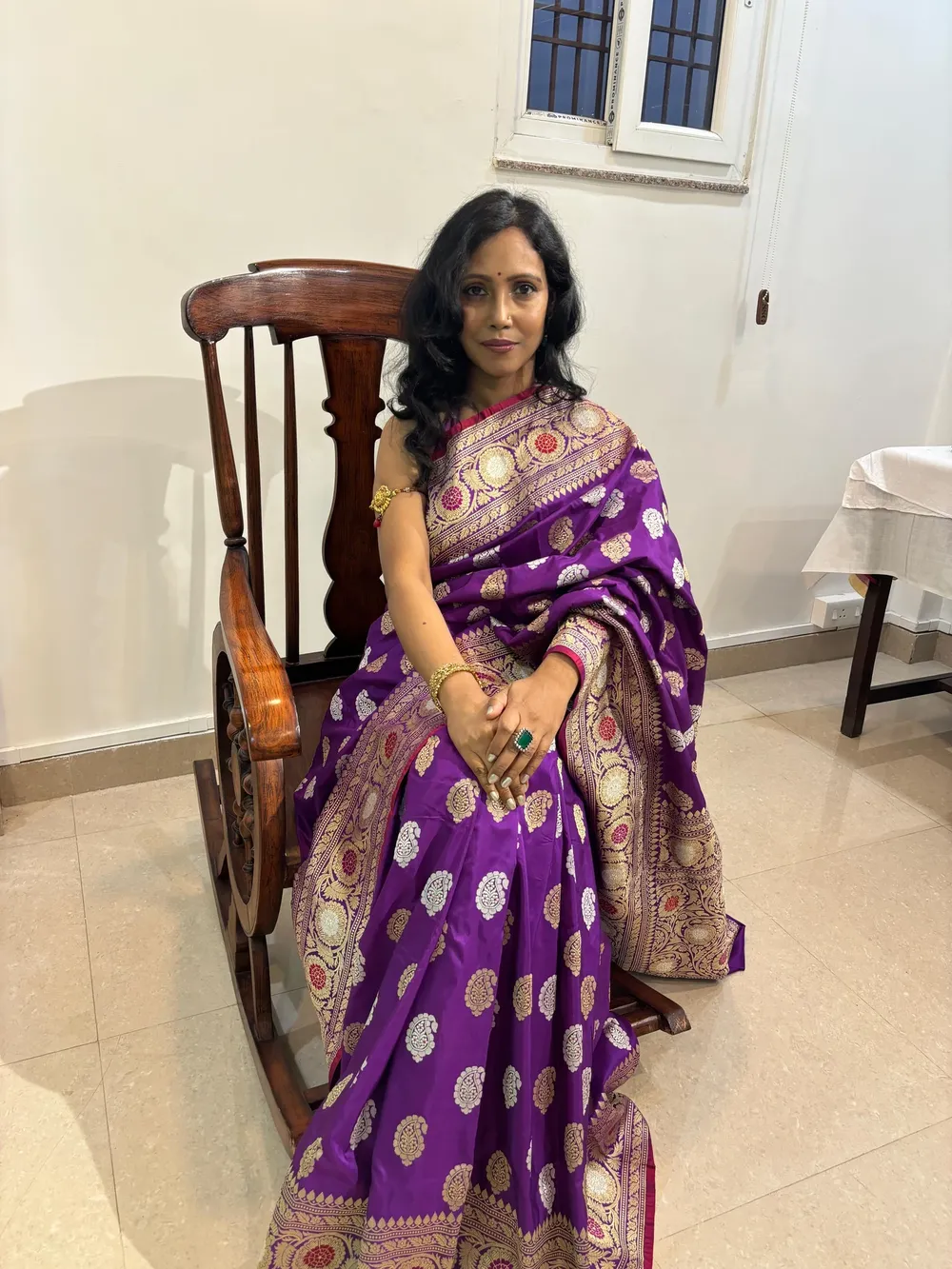
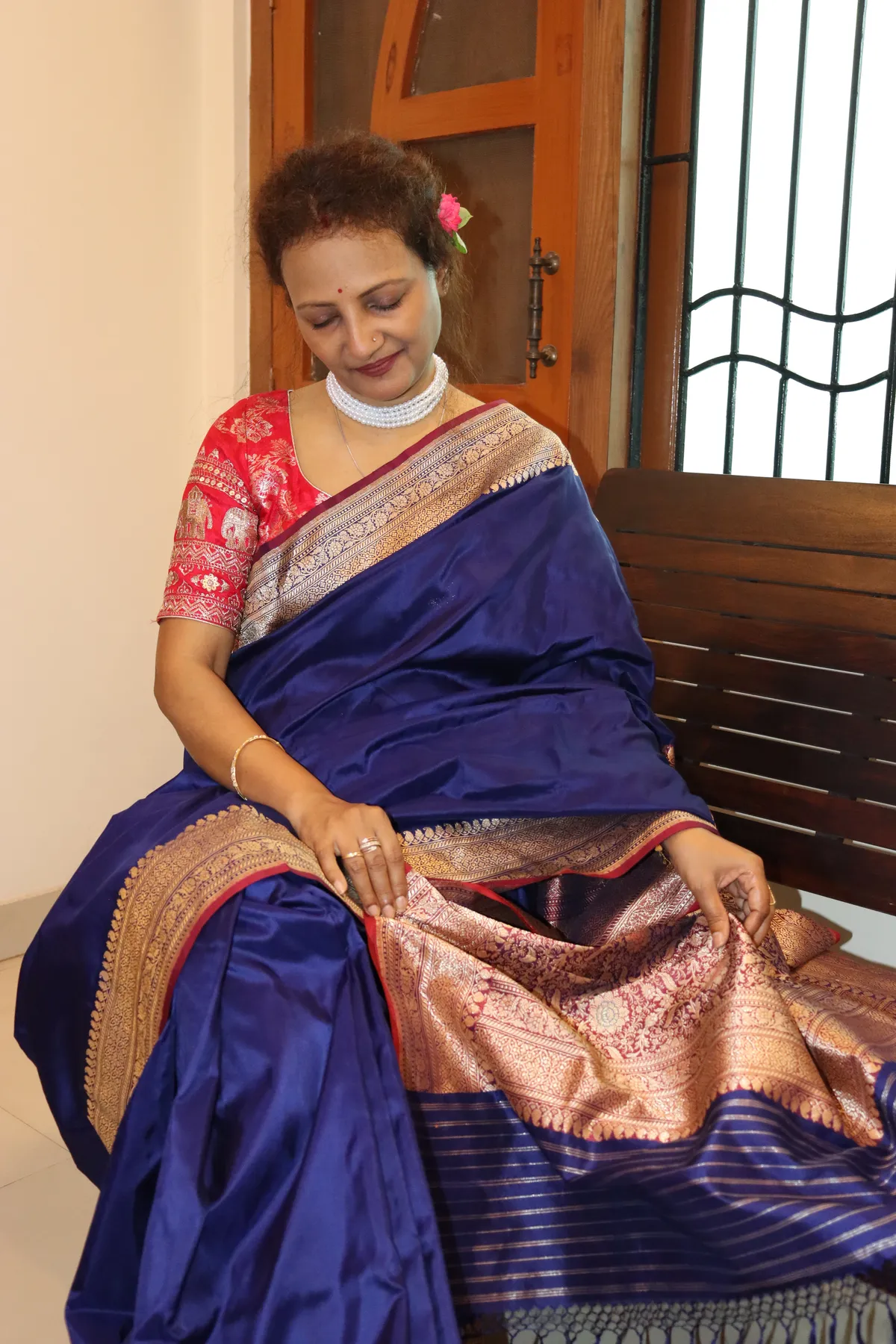
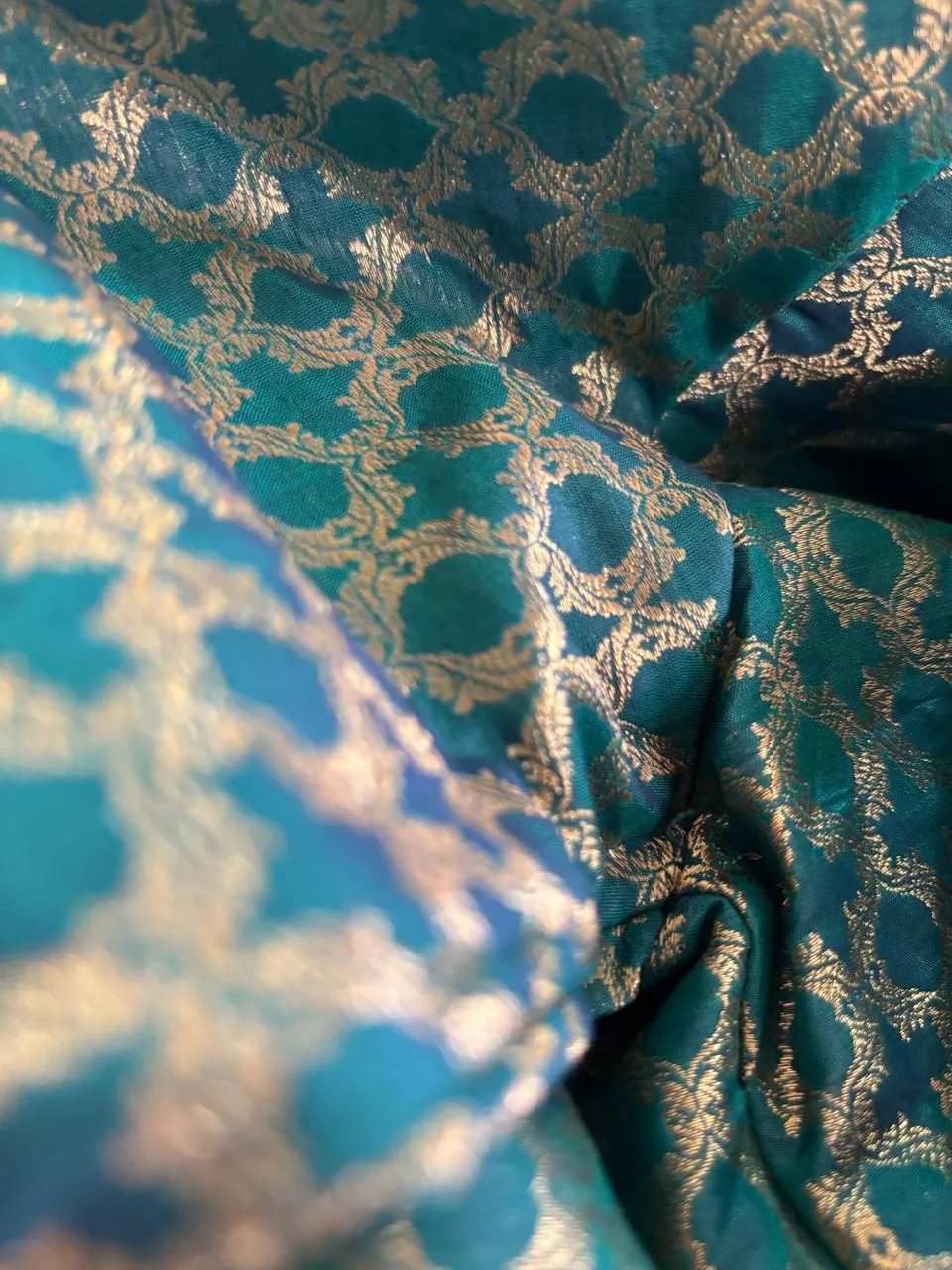
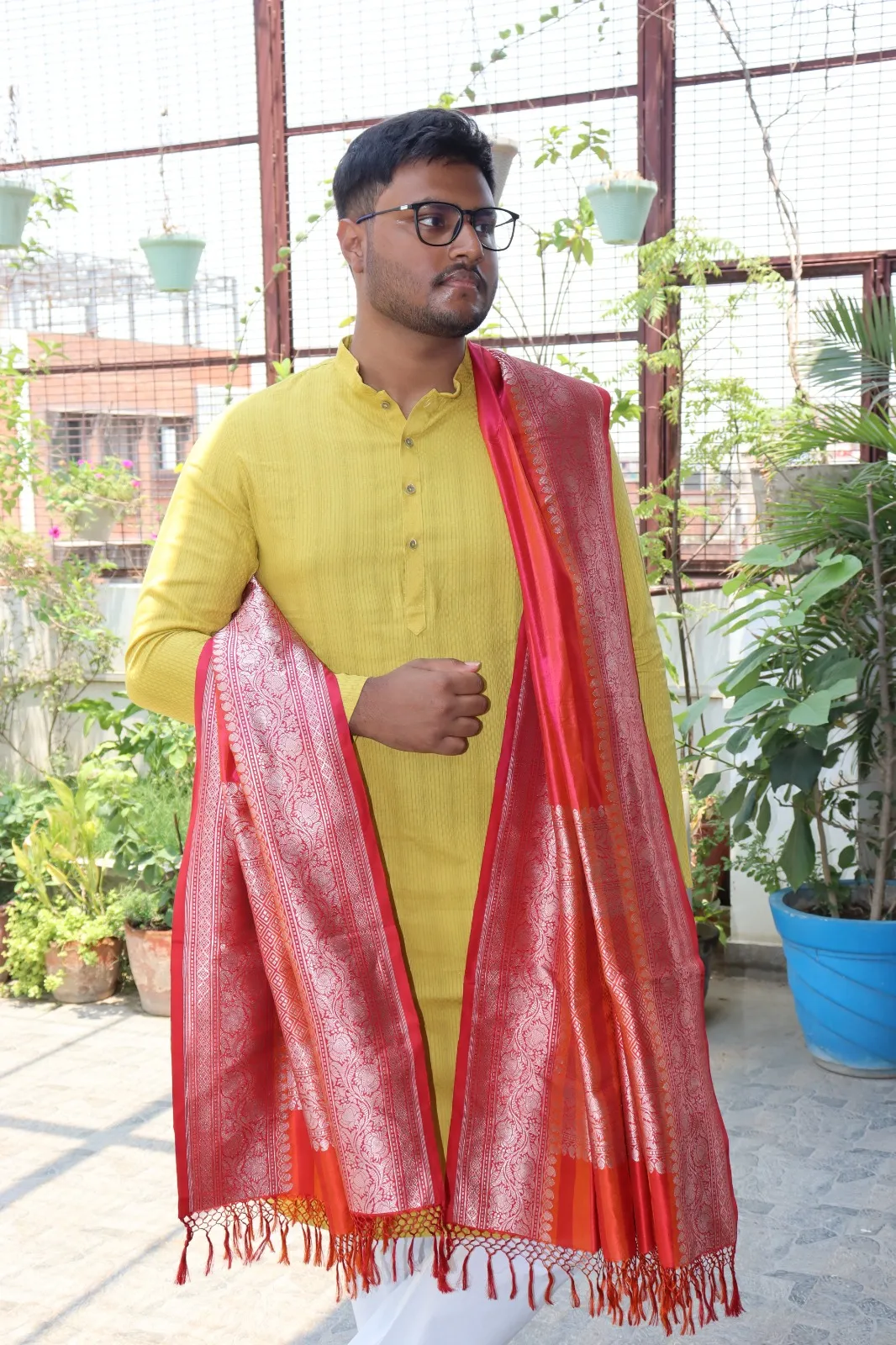
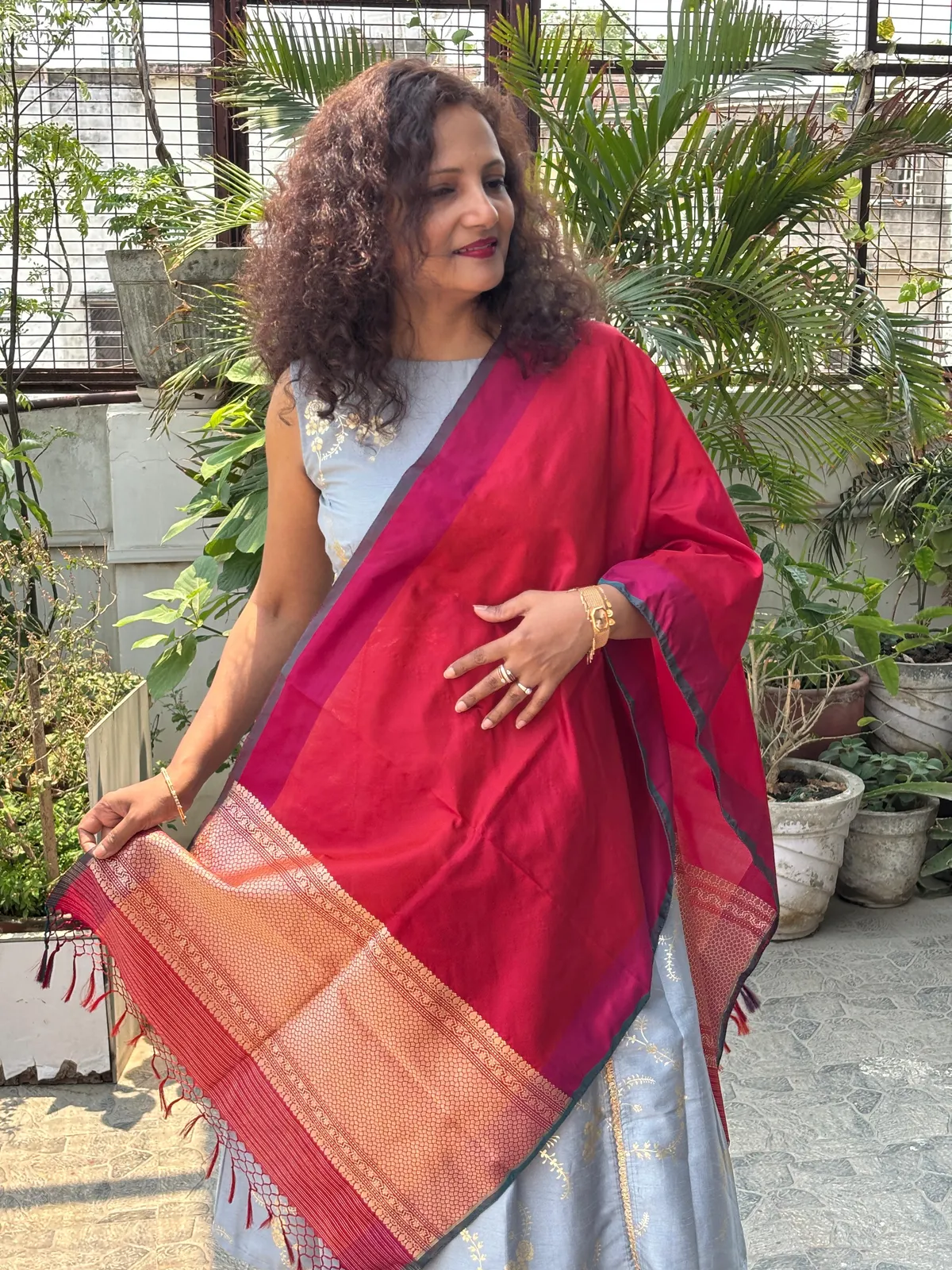
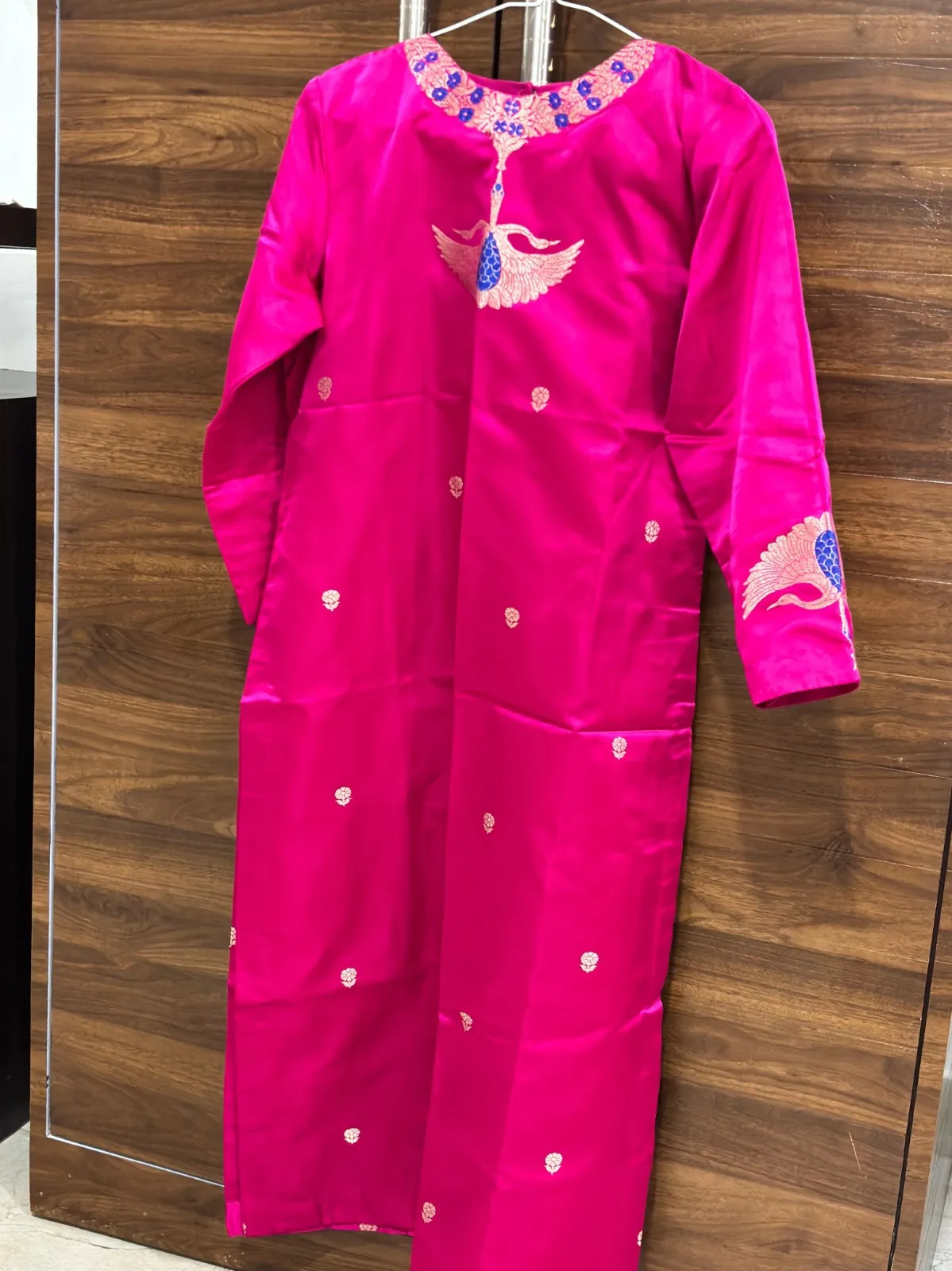
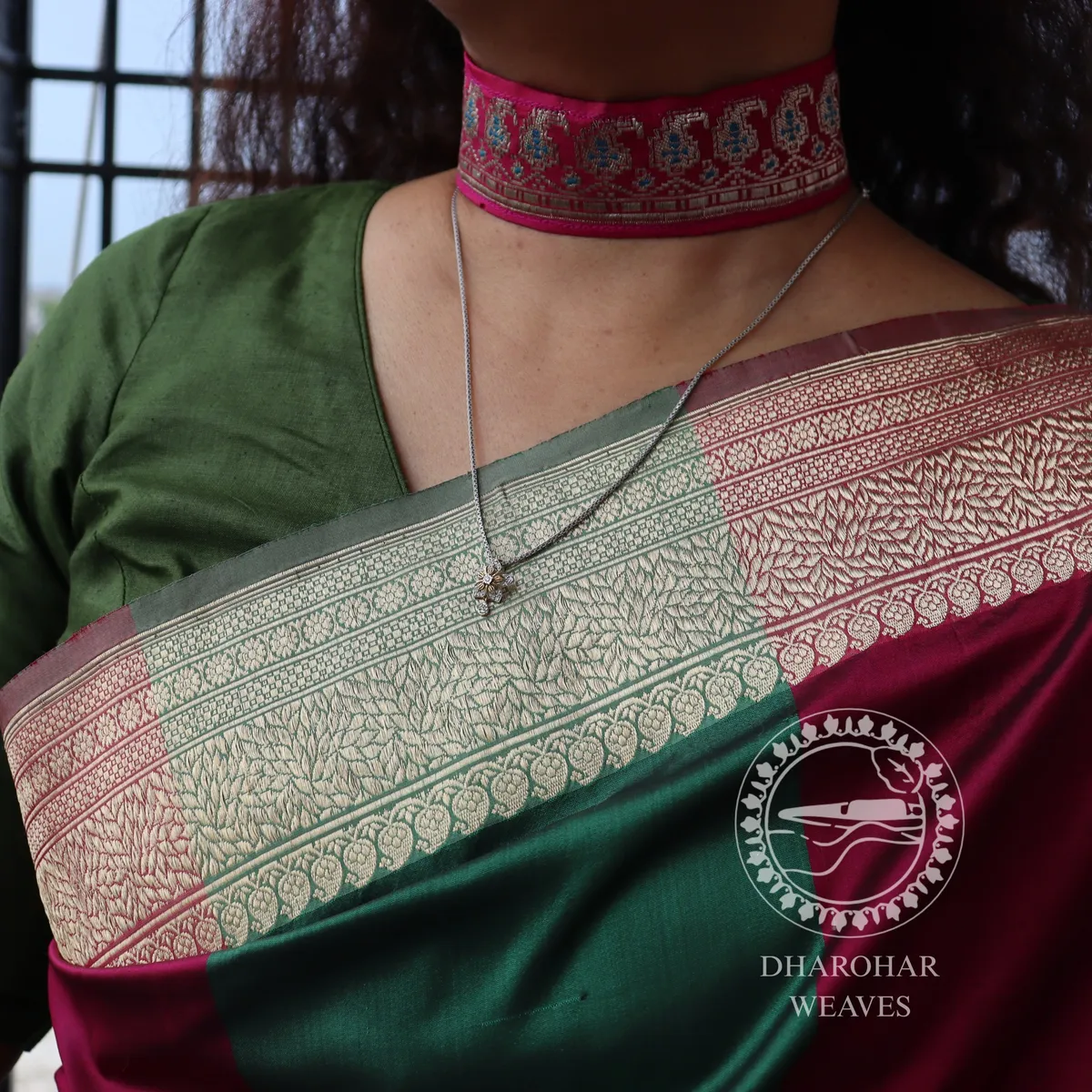

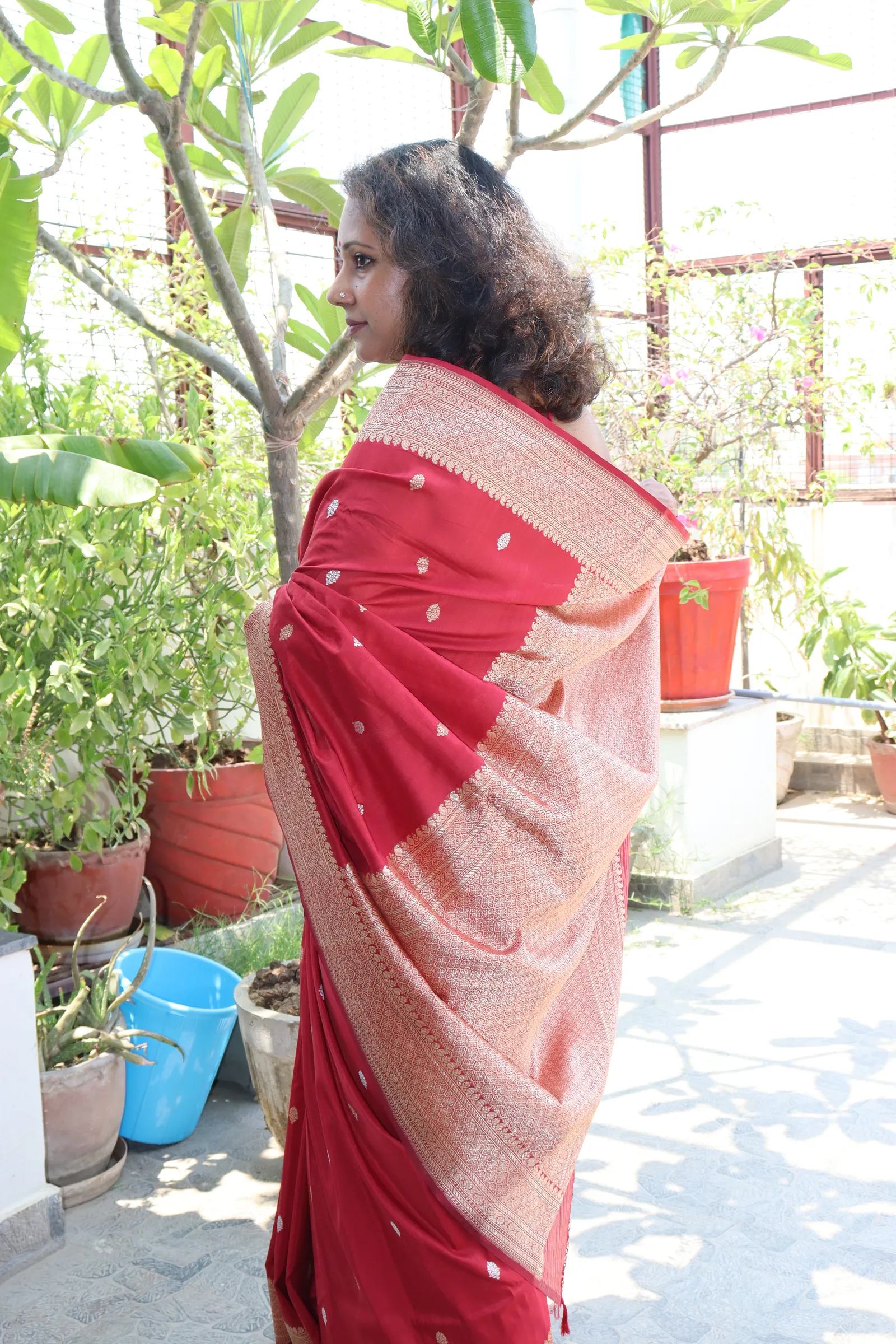
A Banarasi saree is more than a beautiful piece of clothing. It represents the rich weaving heritage of Varanasi and generations of skilled artisans who transform silk and zari into intricate works of art.
Known for luxurious fabrics, detailed motifs, rich borders, and elaborate pallus, Banarasi sarees have been an important part of Indian weddings, festivals, and family traditions for generations.
However, the market today also includes many machine-made and powerloom sarees inspired by traditional Banarasi designs. For buyers, understanding the basic characteristics of authentic Banarasi handloom can make it easier to make an informed purchase.
What Is a Banarasi Saree?

A Banarasi saree is traditionally associated with the weaving heritage of Varanasi, historically known as Banaras or Kashi, and its surrounding weaving regions.
These sarees are known for intricate weaving, luxurious fabrics, decorative borders, detailed pallus, and motifs inspired by flowers, leaves, vines, nature, architecture, and traditional Indian designs.
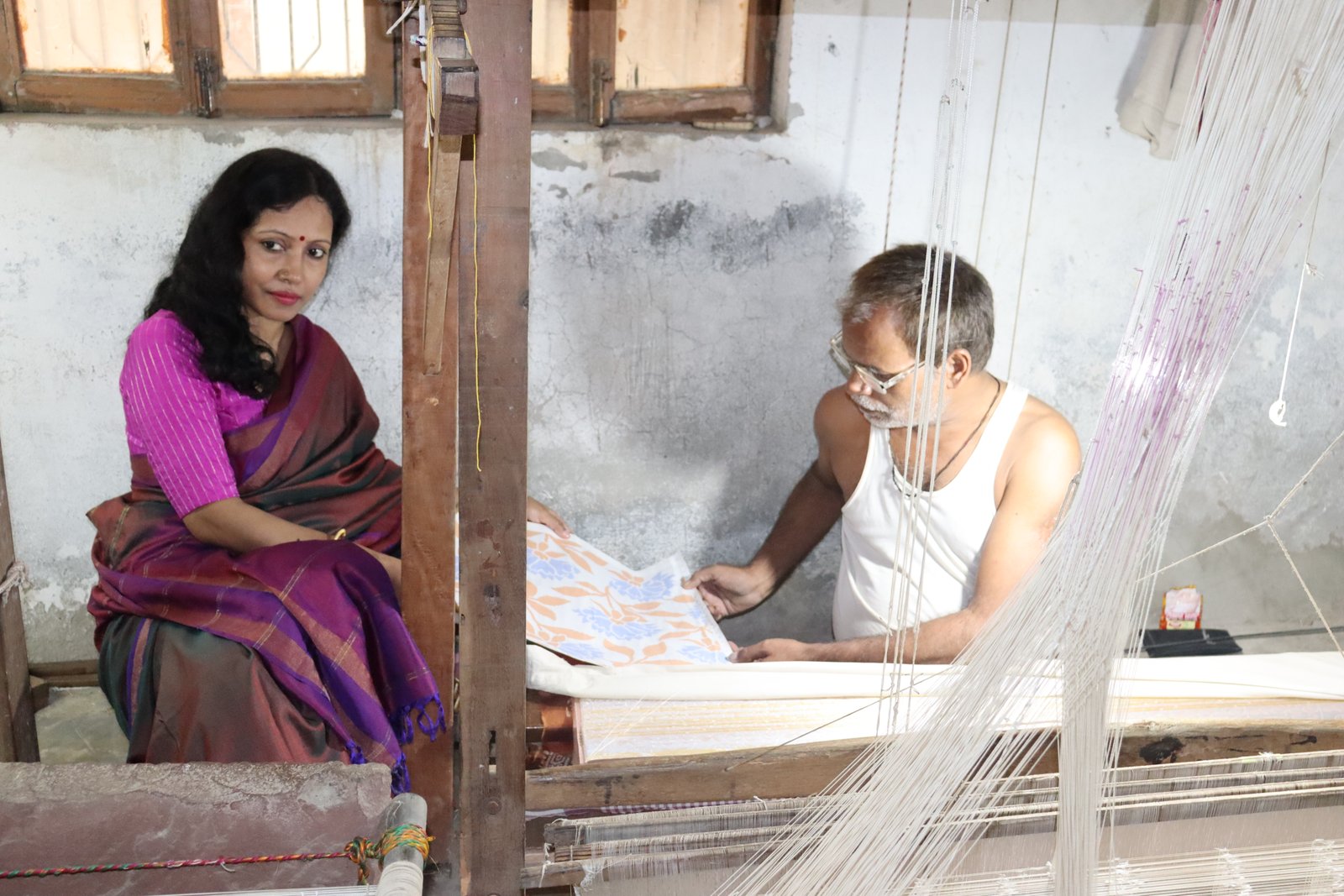
Depending on the weaving technique and complexity of the design, a handwoven Banarasi saree may take days, weeks, or even longer to create.
Why Does Authenticity Matter?

Banarasi sarees are available today across a wide price range. Some are genuine handloom creations, while others are produced using powerlooms or machines.
There is nothing inherently wrong with machine-made sarees. They can make Banarasi-inspired designs more affordable and accessible. The problem arises when a machine-made saree is presented and priced as a traditional handwoven product.
When you purchase authentic handloom, you are paying for skilled artisan labour, traditional weaving knowledge, quality materials, time-intensive craftsmanship, complex design execution, and the individuality of a handmade textile.
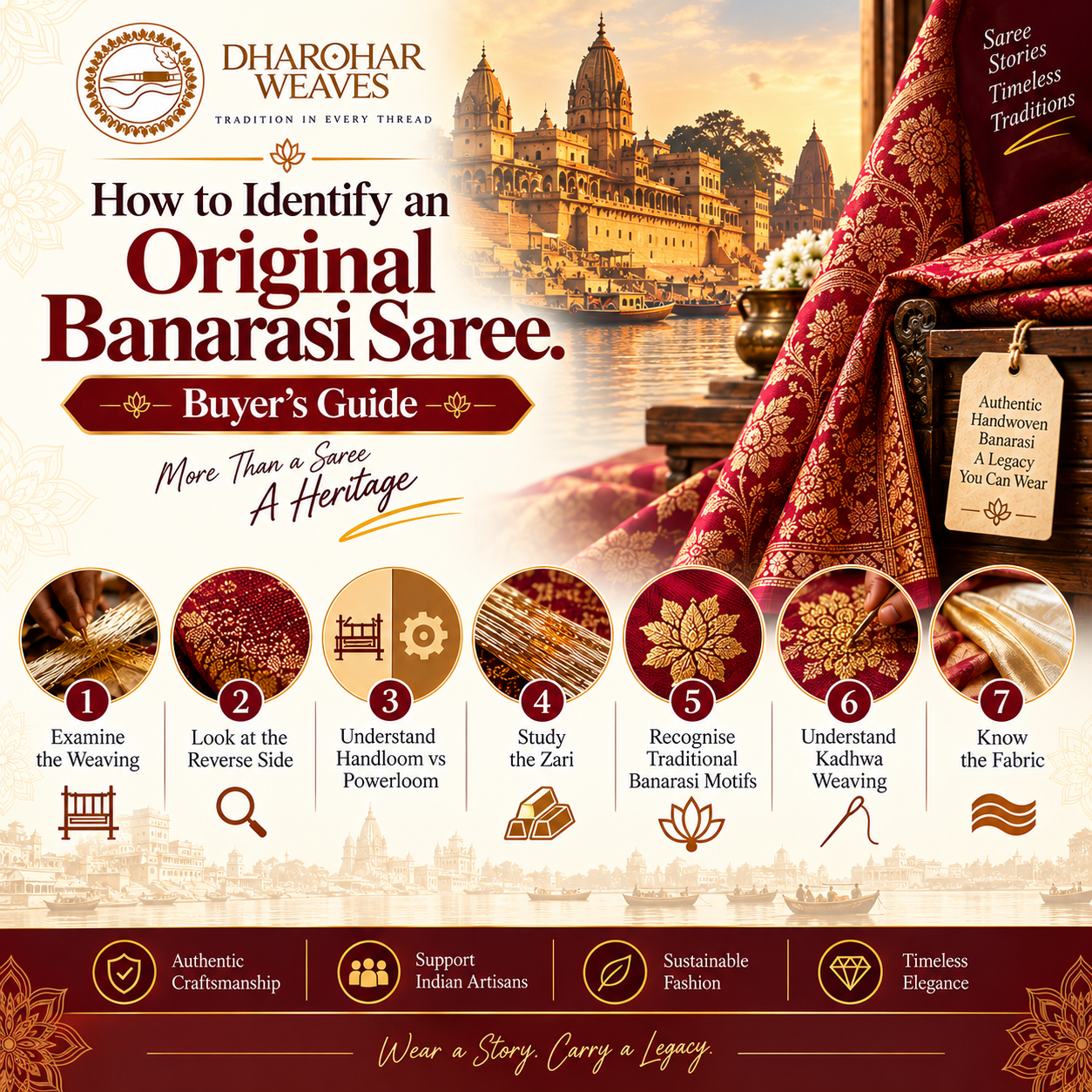
- Examine the Weaving

One of the first things to examine is the weave itself.
Because handloom textiles involve substantial human control, you may notice tiny irregularities or subtle variations in the weaving. These are not necessarily defects. In many cases, they reflect the handmade nature of the textile.
Machine-made fabrics generally have greater uniformity because machines can reproduce the same pattern repeatedly at high speed.
- Look at the Reverse Side

Turn the saree over and carefully examine its reverse side.
Depending on the weaving technique, you may notice thread structures, floats, or supplementary threads behind decorative motifs. These details can help you understand whether a design has actually been woven into the textile rather than simply printed or applied to the surface.
However, there is no single reverse-side pattern that proves authenticity for every Banarasi saree. It should always be considered along with other characteristics.
- Understand Handloom vs Powerloom

Handloom Banarasi Saree
A handloom saree involves substantial manual participation from the artisan. Depending on its complexity, production may take days, weeks, or considerably longer.
Common characteristics can include subtle weaving variations, detailed motifs, complex thread interactions, handcrafted character, and individuality between pieces.
Powerloom Banarasi-Style Saree
Powerlooms use mechanised processes, allowing sarees to be produced more quickly and in larger quantities.
The designs can be attractive and affordable, but they should be transparently described as machine-produced rather than handmade.
The important issue is not whether one should choose handloom or powerloom. It is knowing exactly what you are purchasing.
- Study the Zari

Zari is an important decorative feature of many Banarasi sarees and is commonly used in motifs, borders, and pallus.
Today, different types and qualities of zari are available, including real zari and various tested or imitation options. Therefore, a golden-looking thread alone does not prove that the saree contains real zari.
Ask the seller directly what type of zari has been used.
Avoid destructive home tests involving burning, scratching, chemicals, or cutting, as they can damage the textile and may not provide reliable results.
- Recognise Traditional Banarasi Motifs

Banarasi weaving has a rich design vocabulary. Common motifs and layouts may include:
- Buti and Butidar patterns
- Floral motifs
- Leaves and vines
- Bel or creeper patterns
- Jaal and Jangla-inspired layouts
- Paisley forms
- Geometric elements
- Decorative borders
- Nature-inspired patterns
Look closely at the detailing, edges of the motifs, interaction between colours and zari, and overall composition.
- Understand Kadhwa Weaving

Kadhwa is a technique strongly associated with intricate Banarasi weaving.
In this technique, motifs can be woven individually instead of carrying unnecessary supplementary threads continuously across large sections of the fabric.
Because individual motifs can require considerable time and skill, intricate Kadhwa sarees may command premium prices.
When purchasing a Kadhwa saree, ask the seller about the technique and, where possible, examine the reverse side to better understand how the motifs have been constructed.
- Know the Fabric

Not every Banarasi saree is made from the same material.
You may come across terms such as:
- Katan silk
- Organza or Kora
- Tissue
- Georgette
- Silk blends
- Other traditional and contemporary textile variations
Therefore, the word “Banarasi” should not automatically be interpreted as one specific fabric composition.
Ask the seller about the base fabric and fibre composition, especially when purchasing a premium saree advertised as pure silk.
Conclusion
Identifying an authentic Banarasi saree begins with understanding how it is made.
Instead of judging a saree only by its shine, colour, or price, examine its weave, reverse side, motifs, zari, fabric, and weaving technique.
These details help you appreciate not only the beauty of a Banarasi saree but also the craftsmanship and time that goes into creating it.